I spent decades watching patients who didn't understand their own bodies and kids who dreamed of medicine but had no real path to get there. So I built one. Physician-designed courses that give children and teens clinical-level knowledge no other program provides. 🩺 MedPath: Pre-Med for Kids and Teens 🌱 LifePath: Understand the one body you get for your whole life. 🧠 Neurodiversity: Because no two brains are wired the same way.
Share
🧠 Neuro-Circle: A sweater for my cat and a "labor" tip for your January
Published 10 months ago • 5 min read
Dr. Robin's Neuro-Circle
A Monthly Neuro-Newsletter
A Note from Dr. Robin
Hi there!
January can be a rocky transition for a lot of families! I've learned that the most important thing I can do is give myself and my family a lot of grace. There are so many articles and videos promising "the" solution, but if it were that easy, everyone would be doing it!
Go ahead and try some ideas that might make your return to a regular schedule a little easier. But the most important thing you can do is to not feel like you have to have it all together. It reminds me a little of being in labor: the contractions are going to happen. But when I relaxed into them, they were much more manageable than when I fought them.
This week, try to relax into what's happening with acceptance and forgiveness. Tell yourself what a good job you're doing. Talk to yourself the way you would to a friend. You are doing a good job, and it will get better!
Together with you on this journey,
Dr. Robin
Tina's Corner
Tina is the unofficial mascot of this newsletter! Just like many of us, my cat has very specific sensory needs. Without one of her sweaters, she feels unregulated and can even start to hurt herself.
Tina meditating in the sun while wearing her stripey sweater
Temperature Shifting
When you or someone you love is getting overwhelmed, the standard advice to go to a "quiet place" might not help if your brain is on fire! You need something to interrupt physiologically.
The Tip: Keep a few different styles of ice packs in the freezer such as a face mask, a reusable ice stick (for water bottles) or reusable shaped ice cubes (they come in stars, hearts, and more!) When things get heated, grab some ice. Wear the face mask over your face, the back of your neck, or the top of your head. Try rolling the stick or shapes in your hands or under your feet.
The Science: Intense cold can trigger the "mammalian dive reflex," which slows the heart rate and resets the autonomic nervous system via the vagus nerve.
What I'm Reading
This month’s pick is a middle-grade novel (my favorite genre even as an adult, so you'll be seeing a lot of them!) that I personally fell in love with a couple of summers ago. I remember reading it by the lazy river at our municipal water park while my kids floated in circles! My younger child read it afterward and said they wished every person who hadn't been understanding of neurodiversity would read it, too.
Why I’m sharing this: The story follows Selah, a girl who has "rules" for how to act normal until she finally "explodes" and has to learn that being different isn't being broken. I especially noticed that Selah isn't just a character things happen to, she has real agency. She stands up for herself and actively works to understand her own wiring.
If you want to explore more about what makes you or your loved one "Good Different" then make sure to download the free Neurotype Self Report Inventory (NSRI). A lot of people sign up but never use it and aren't getting the benefit. So make sure to watch the really short video and download the inventory right away! You can also share the link with friends and family.
My Take: I love this book because it challenges the "fix it" narrative. Selah doesn't "get better," she gets understood, starting with herself. It’s a wonderful tool for teaching kids and adults that standing up for your needs changes everything.
This isn't an affiliate link, just making it easy for you to find. You can also install The Library Extension to find it at your library!
Neuro Words to Know:
Monotropism
Learning the language of neurodiversity helps us advocate for ourselves and our loved ones!
Definition: A tendency to focus mental resources on a small number of interests at any one time, often missing things outside of that "attention tunnel."
Why it matters: This "hyperfocus" can lead to profound expertise and deep flow states, but it also makes multitasking and transitions physically difficult. If you call your loved one to dinner, they may even respond to you verbally while their brain is still "gated" inside their task. They aren't being rude or ignoring you—their brain simply hasn't "surfaced" from the tunnel yet!
Dr. Robin’s Tip: To help a monotropic brain transition, try to enter their "tunnel" first. Instead of calling from the other room, walk over, make a gentle connection (like a hand on the shoulder), and wait for them to look up before talking.
Ask Dr. Robin!
Question: I keep hearing about "an epidemic" of autism. Are rates actually rising?
Answer: This is a complicated topic so I'll have to just skim the surface, unfortunately. But there are a couple different things to consider here.
First of all, rates of diagnosis are rising but the latest CDC estimates show that the prevalence of autism in adults (how many people actually have it) is around the same as kids, they just didn't get diagnosed! To really dig in to how how statistics work, Hank Green did a deep dive.
However, you do see places with more autism than other places. This isn't because they are being exposed to harmful energy waves or something. It's most likely because of another biological factor at play: assortative mating. In the past, our "mating pool" was usually limited to whoever lived in our small town. Today, modern life (universities, specialized career paths, and even dating apps) allows us to filter for partners with similar interests, communication styles, and cognitive traits.
What this means for neurodiversity:
Specialized Environments: Highly systemizing or detail-oriented people (traits often linked to the "autism phenotype") are now concentrated in the same universities and tech hubs.
Like Marries Like: Studies show we are genetically more similar to our spouses than to random pairings. When two people with "autistic-leaning" traits meet and have children, those genetic traits cluster.
The Technology Boost: Dating apps allow us to filter for education and specific personality types, making it easier than ever for neurodivergent people to find their "soulmate" who speaks their same internal language.
The Bottom Line: We aren't seeing an "epidemic" caused by something in the water; we are seeing the result of a more connected world. Between better diagnostic tools and a society that finally allows "like-minded" brains to find each other, neurodiversity is simply becoming more visible—and more concentrated—than ever before.
Do you have a question about the biology of neurodiversity? Hit reply and ask me! Your question might be featured in next month’s issue.
🔺Monthly Shareable
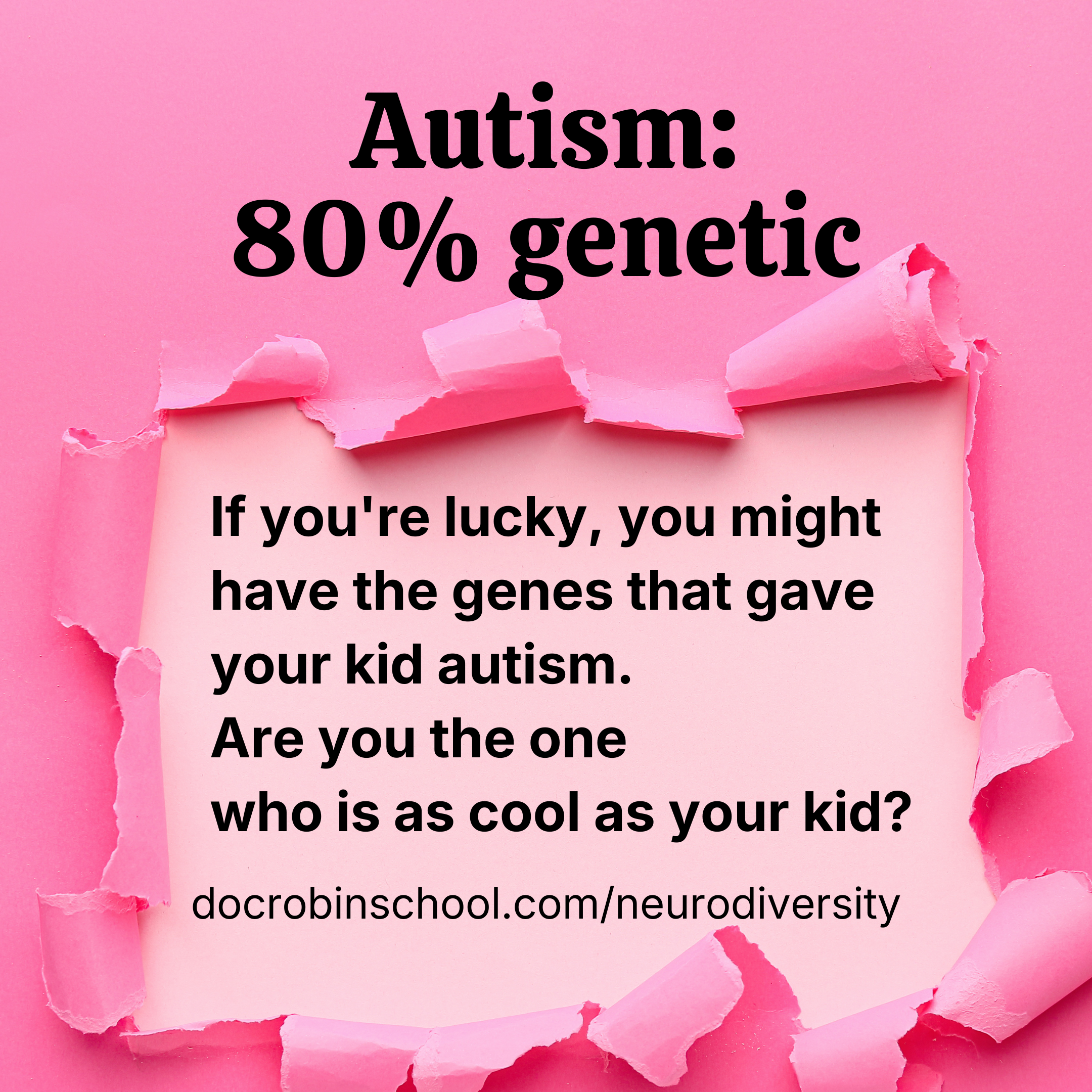
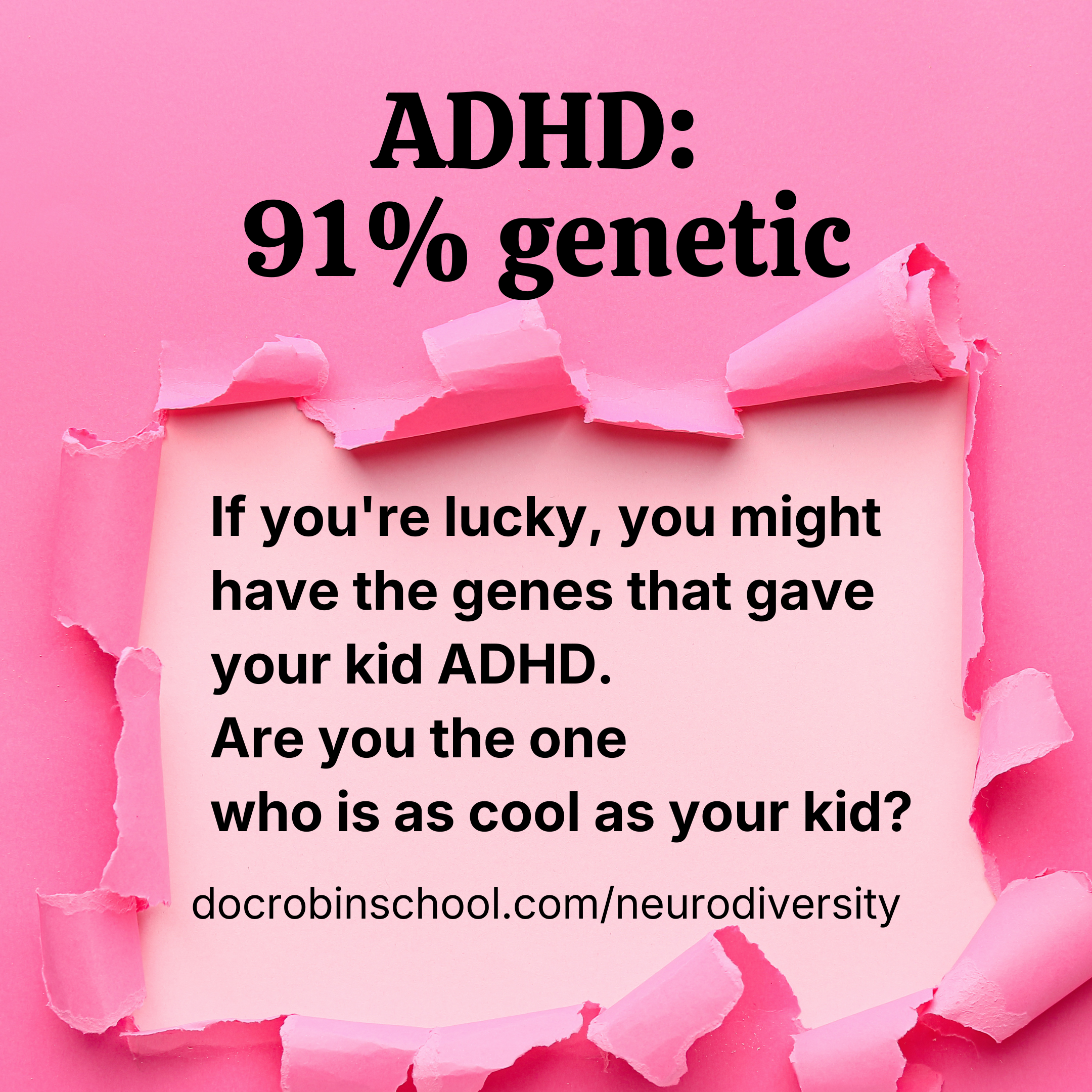
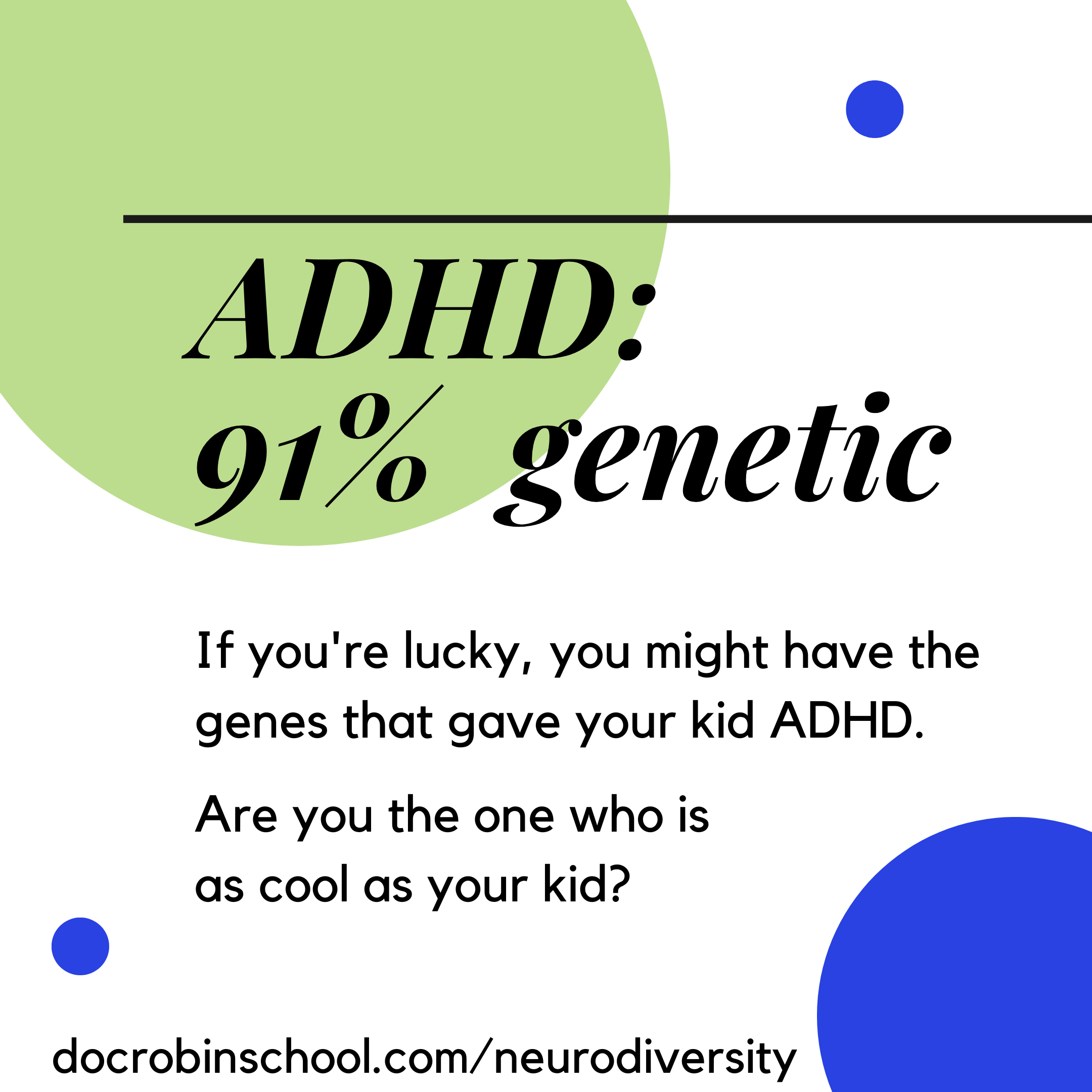
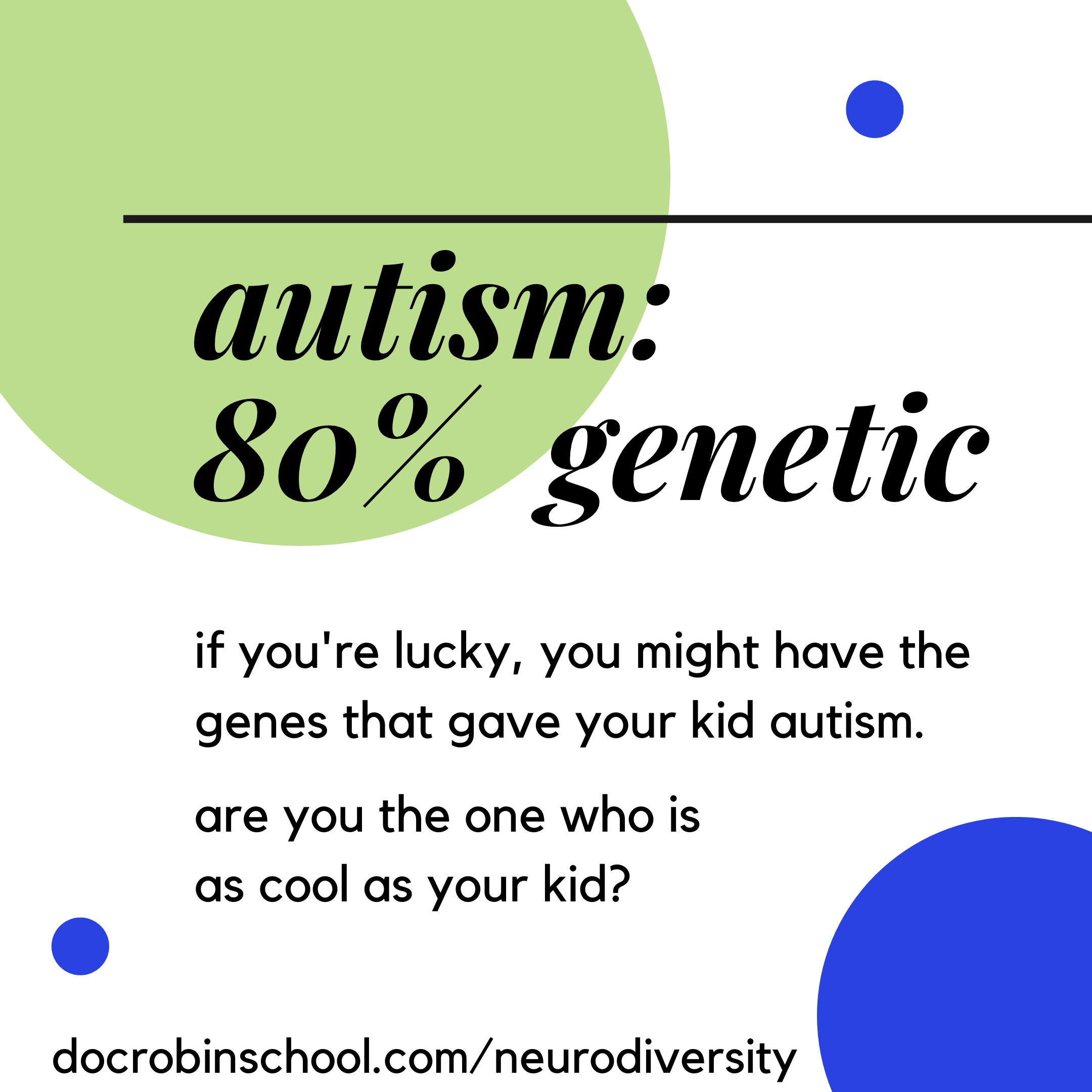
There's a lot of misinformation out there right now about the root causes of neurodiversity. The science is clear: neurodiversity is a beautiful, genetic part of the human story. Sharing any of these on your social media or via text or WhatsApp is a quiet way to support the community.
Your "Advocacy" Homework: Click on any image to download it! It’s a great way to start a conversation with friends or family members who might still be learning about how our brains work.
Please kindly unsubscribe instead of reporting them as spam. Choosing to unsubscribe helps us a great deal, as reporting our emails as spam significantly impacts our school and our ability to connect with other subscribers. Thank you for your understanding.
I spent decades watching patients who didn't understand their own bodies and kids who dreamed of medicine but had no real path to get there. So I built one. Physician-designed courses that give children and teens clinical-level knowledge no other program provides. 🩺 MedPath: Pre-Med for Kids and Teens 🌱 LifePath: Understand the one body you get for your whole life. 🧠 Neurodiversity: Because no two brains are wired the same way.
Dr. Robin's Inner Circle Members Only Newsletter A Note from Dr. Robin Hi Reader, During residency, family medicine doctors are required to do emergency medicine rotations. And my favorite place to do mine was a small rural hospital in Colorado...one doctor on duty at a time, handling whatever walked through the door. Rural emergency departments are often run by family physicians, not ER specialists. And the types of problems we saw were very different than you'd see in the city. There was...
Dr. Robin's Inner Circle Members Only Newsletter A Note from Dr. Robin Hi Reader, During my residency I got to spend a month on a public health rotation. And I loved every minute of it. I went into family medicine because I like thinking about systems, not just individuals. Nobody gets sick alone. Diseases cluster. Conditions follow patterns. There are reasons why certain things show up in certain communities at certain times. And figuring that out is a public health problem. But the thing I...
New This Week at Dr. Robin's School Hi there! When emergencies happen, kids don’t need to panic—they need a plan. This month, we’re breaking preparedness into small, doable steps. Start by building your Safety Team with this week’s short video and downloadable worksheet. 🎬 The Feature Lab This week's video focuses on the first step to creating an emergency plan for your family. There will also be a playlist available starting next week so you can work through all the pages at once! 📥 The...